

By Rotimi Olaleye
The United Nations Children’s Fund (UNICEF) and critical stakeholders have called on the federal government of Nigeria to implement more equitable budgeting practices to protect and promote children’s rights.
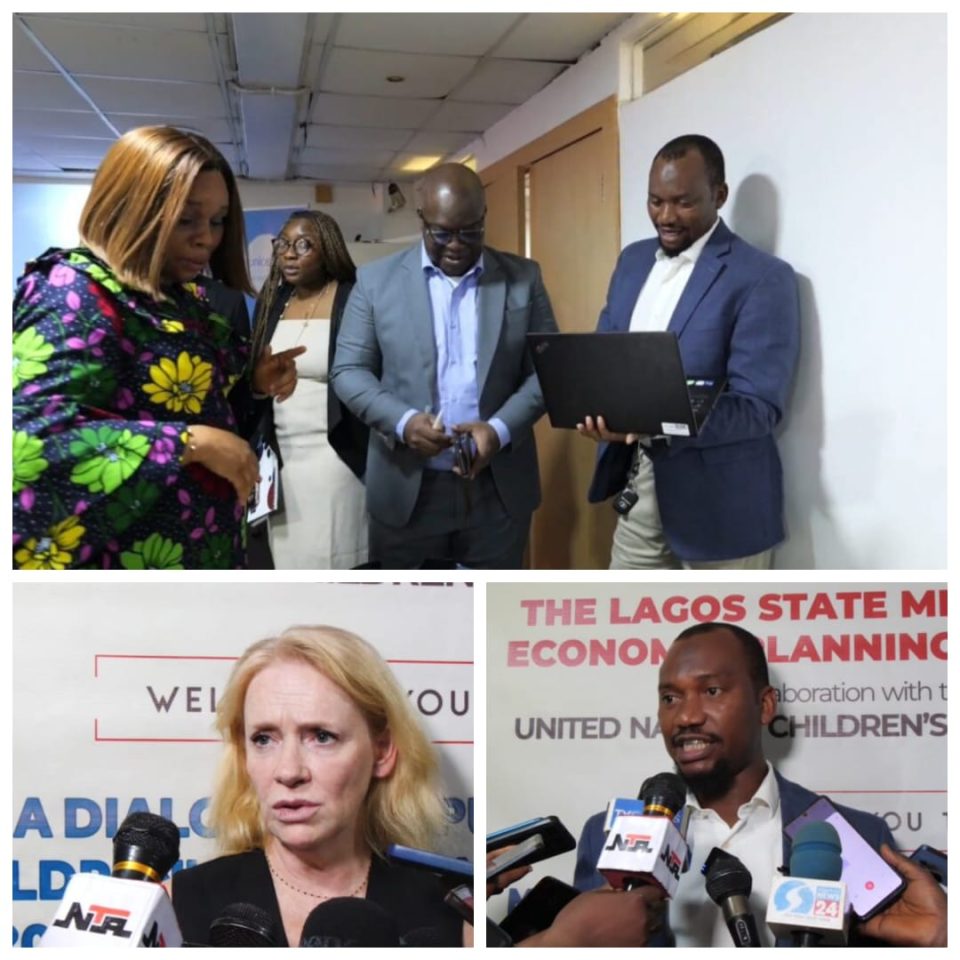
This call was made at a media dialogue on “Public Spending for Children’s Rights”, held in Lagos State, to commemorate 2025 Day of the African Child.
In her opening remarks, Chief of UNICEF’s Field Office for Southwest Nigeria, Celine Lafoucriere described public spending on children as not only a moral and legal obligation but also an economic imperative.
She noted that well-targeted investments in children yield long-term dividends in national development, human capital and democratic stability.
Lafoucriere said the agency has supported the Lagos State Ministry of Economic Planning and Budget in creating a budget-tracking tool to ensure there is transparency and accountability on any spending on children.
Her words, “Today, nearly 50 years after the Soweto schoolchildren marched for their rights, millions of Nigerian children are still demanding access to basic public services.
“Despite Nigeria’s ratification of the UN Convention on the Rights of the Child in 1991, many children remain without clean water, proper nutrition, healthcare, or education.
“The real issue is prioritisation. There will never be enough budget for everything, but is Lagos and indeed Nigeria, prioritising its children and youth as the future of tomorrow?”
The Social Policy Specialist with UNICEF, Muhammed Okorie lamented the inadequate implementation and spending for Children’s rights, despite the country’s commitment to the Sustainable Development Goals (SDGs).
Okorie said actual spending in many states falls short, undermining efforts to deliver essential services like healthcare, education, water and sanitation to children.
He stressed on the importance of aligning public spending with children’s needs, citing national and international benchmarks such as the Abuja Declaration, which recommends a minimum of 15% of government budgets for health.
“States are at different levels of commitment and implementation. Although many have integrated children’s rights into development plans and budgets, the gap between budget allocation and actual expenditure is still wide.
“We must not only budget adequately, but spend equitably reaching the most deprived children wherever they are”. He added
The Permanent Secretary of Lagos State Ministry of Economic Planning and Budget, Olayinka Ojo, reiterated the state’s increasing investment in children over the years.
Ojo, represented by the Director of the Ministry, Olufemi Orojimi noted that early childhood development remains a key focus of the state’s development strategy, acknowledging UNICEF’s support in strengthening data systems and budget transparency.
“The Lagos State Government recognises that investment in children is an economic driver. It remains committed to increasing budgetary allocations and actual expenditures that promote the survival, development, protection, and participation of every child”. He added
