

Adebayo Adenrele
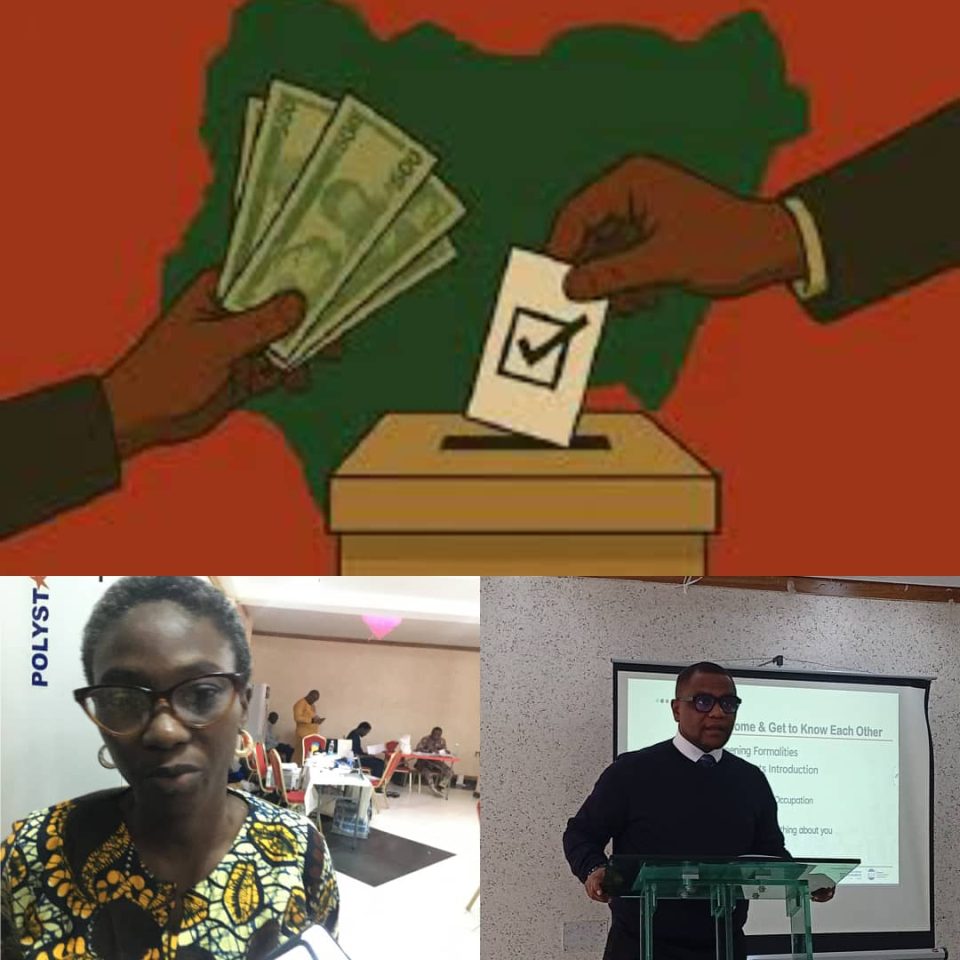
As the June 20, 2026 gubernatorial election gathers momentum in Ekiti, a Civil Society Organisation under the auspices of Kimpact Development Initiative (KDI) has commenced the training of election monitors in Ekiti State as part of efforts to track vote buying, electoral violence and other irregularities ahead of the forthcoming June 20 poll.
Speaking with journalists in Ado-Ekiti during the 2-day election training exercise themed: “Strengthening Electoral Integrity: Monitoring Election Violence and Political Finance in Ekiti State”, the Programme Manager of KDI, Barrister Bunmi Eyelade, said the initiative was designed to closely monitor the election environment and generate early-warning signals that could help prevent violence and ensure a free, fair and credible election in the state.
According to Eyelade, the organisation, through the project ‘Nigeria Election Violence Education and Resolution (NEVER)’, would equip participants with the skills and tools required to document incidents of vote buying, excessive campaign spending and other activities capable of undermining the integrity of the electoral process.
She explained that information gathered by the monitors would be shared with key stakeholders, including the Independent National Electoral Commission (INEC), security agencies, and election observers, to enable timely interventions where necessary.
Eyelade disclosed that 45 individuals were selected for the long-term monitoring exercise, comprising 10 media professionals and 35 community-based observers drawn from local government areas across the state.
Addressing concerns about vote buying and campaign finance abuses, Eyelade said KDI was paying particular attention to tracking visible and measurable campaign expenditures.
She noted that the monitoring would help determine whether political actors were exceeding constitutionally approved spending limits, adding that unchecked spending often fuels vote buying and election-day violence.
Her words, “Today, we are training individuals who live in communities within the state to collect information on happenings around them in their environment. We are looking at the election environment generally, what is going on.
“The essence of this exercise is that, from the information we gather, especially in the pre-election period, we can make early-warning predictions that could help the conduct of the election. We are focused on achieving a free, fair and credible election in Ekiti State.
“To achieve this, certain things must be put in place by stakeholders, including the election management body and security agencies. These stakeholders need information. Election observers, both national and international also need to be prepared and informed on what to expect.
“KDI gathers information to aid the election process so that, at the end of the day, we can have a credible election and confidently say Nigeria has made progress. That is why these individuals need to be properly trained. We are equipping them with the tools, information, and knowledge required to go into the field and gather accurate and relevant data.
“For this long-term monitoring, we have 45 individuals. Ten are media professionals who will gather information related to media coverage, mainstream and online media, including television, radio, newspapers and online platforms.
“We also have individuals who live within communities. They are residents in those local governments, which enables them to provide accurate information. We are not gathering information from afar; we are ensuring that people who live in these communities supply firsthand information about what is happening in their local governments and environments.
“It is important for politicians to know that they are being observed. It is easy to say politicians are spending more than expected, but this initiative helps put figures to such claims.
“We are tracking campaign spending not under-the-table spending, but visible and measurable expenditures. This includes advertisements on radio and television, billboards, face caps, rice, and other campaign materials that can be physically accounted for.
“The aim is to determine whether spending exceeds the limits stipulated by the constitution. We know elections involve money, but it is important to ensure that spending stays within constitutional requirements. That is the essence of this monitoring exercise”.
