

David Williams
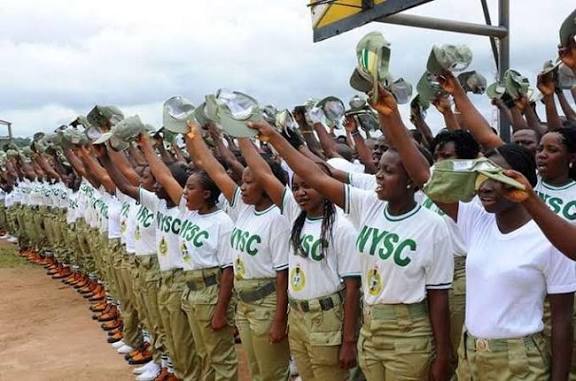
The Independent National Electoral Commission’s (INEC) has proposed N873.78 billion budget for the 2027 general elections, out of which National Youth Service Corps (NYSC) members and other ad hoc personnel will receive N127,000 as allowance on election duties.
The electoral body disclosed that each corps member and ad hoc staff deployed for election duties will receive N127,000 for five days of work — a sharp upward review that has drawn attention from lawmakers and stakeholders.
Breaking down the figure, INEC said N50,000 is earmarked as election duty allowance, N5,000 for training, about N9,500 for feeding, alongside other components that make up the total package.
INEC Chairman, Professor Joash Amupitan, defended the allocation on Thursday while presenting the commission’s 2026 budget proposal before the Joint Committee of the National Assembly on Electoral Matters in Abuja.
He explained that the enhanced payment is part of broader efforts to strengthen election integrity at the grassroots level.
Lawmakers largely supported the move, stressing that the credibility of elections rests heavily on the conduct of presiding officers at polling units, most of whom are corps members and temporary staff.
Chairman of the House of Representatives Committee on Electoral Matters, Hon. Adebayo Balogun, underscored their critical role, noting that “the pyramids of elections are the polling units and the masters of the polling units are the presiding officers”.
He warned that poorly remunerated ad hoc staff could become vulnerable to inducement, potentially compromising the integrity of the electoral process.
Amupitan agreed, stating that a substantial portion of election expenditure goes into honoraria for temporary personnel.
“If they must perform their duties creditably and with integrity, we cannot lose our eyes to such demands,” he said.
The proposed N873.78 billion budget marks a steep increase from the N313.4 billion spent on the 2023 general elections.
According to the INEC chairman, the rise is attributed not only to personnel costs but also to new legal and technological demands, including electronic transmission of results and preparations mandated 360 days ahead of elections under the Electoral Act 2022.
In its breakdown, Election Operations will take N375.75 billion; Election Administrative Costs, N92.3 billion; Election Technology, N209.21 billion; Election Capital Costs, N154.90 billion; while N41.01 billion is set aside for miscellaneous expenses.
Beyond personnel allowances, INEC also proposed the procurement of about 130,000 new ballot boxes, despite having 176,846 polling units nationwide.
Amupitan explained that an audit revealed many existing ballot boxes remain serviceable, hence the decision not to replace all.
He also disclosed plans to redesign voting cubicles following reports from observers highlighting incidents of vote-buying.
The new design would allow ballot boxes to be placed inside enlarged cubicles, preventing voters from stepping out to drop ballots, a move aimed at curbing vote confirmation practices.
Lawmakers further pressed the commission on provisions for by-elections and off-cycle governorship polls scheduled for 2026, cautioning against deferring essential expenditures to 2027.
Responding, the INEC chairman acknowledged the strain posed by frequent by-elections, often triggered by the death of lawmakers, and assured that the commission continues to make financial provisions for such contingencies.
With the enhanced N127,000 package for corps members and ad hoc staff now at the centre of discussions, INEC insists that investing in those who man polling units is critical to delivering credible and transparent elections in 2027.
