
David Williams
Residents of Ekiti State have been urged to ensure the accuracy of their personal and household information in the state’s social register to improve their chances of accessing government interventions targeted at poor and vulnerable Nigerians.
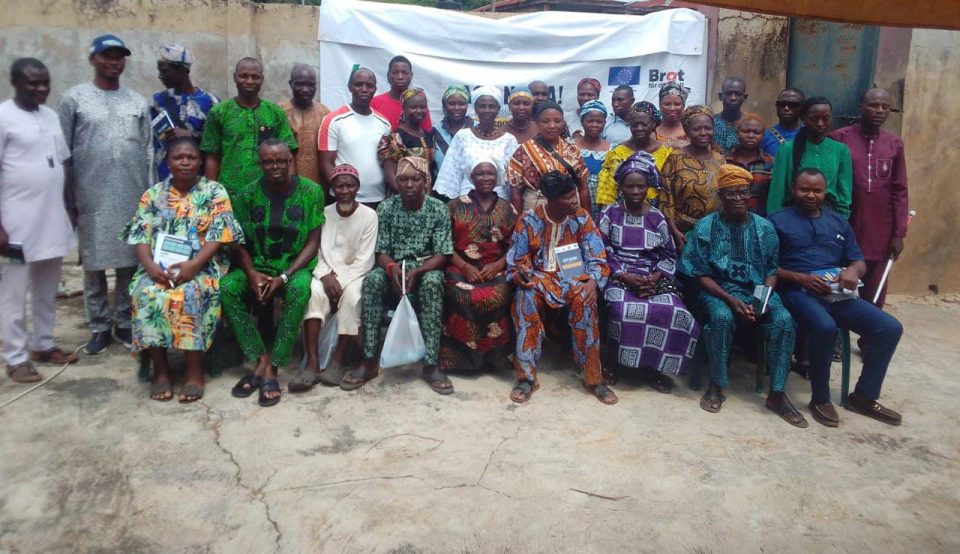
The outreach was organised under the ACT NAIJA Project, implemented by the New Initiative for Social Development (NISD) for the people of Iworoko Ekiti in Irepodun/Ifelodun Local Government area of the state, to strengthen social protection delivery and improve communication between government institutions and vulnerable communities.
A representative of the PWD community, Mr Adedapo, stressed that persons with disabilities had not been neglected by the government, noting that various interventions had been designed to empower them with practical skills and opportunities to become self-reliant.
However, he emphasised that access to such interventions depended largely on registration, urging eligible persons with disabilities to ensure that their names were captured in the social register and relevant groups.
Olori attributed the perception among some residents that they had not benefited from government social protection programmes to inadequate public awareness and limited understanding of the various interventions available to eligible households.
Also speaking, a representative of the State Operations Coordinating Unit’s grievance-handling mechanism, Ayodele Oguleye identified inaccurate personal information, duplication of names and failure to update household records as major challenges affecting beneficiary selection and generating complaints in communities.
According to him, failure to update such information could create discrepancies during verification and affect the selection of beneficiaries for government interventions.
Buttressing on the purpose of the outreach, the State Programme Officer of the ACT NAIJA Project, Rachael Olori explained that some residents who initially claimed not to have benefited from government support acknowledged receiving assistance after officials explained the different programmes and their objectives.
Olori said the initiative brought representatives of relevant ministries and agencies to the community to explain available interventions, clarify eligibility requirements and address complaints directly from residents.
According to her, registration does not automatically translate into immediate access to financial assistance or other benefits, as prospective beneficiaries must pass through various stages of verification and selection under the relevant programmes.
She noted that errors in names, identification details and other personal information could affect the verification process and potentially prevent eligible households from accessing assistance.
Olori added that some registered residents might not be selected during a particular disbursement exercise, depending on the criteria and processes governing the intervention.
Also speaking, a representative of NISD, Olusegun Ojo described the organisation as an intermediary between government institutions and communities, working with relevant ministries and agencies to improve public understanding of social protection programmes.
He said the engagement was intended to bridge the information gap between programme administrators and intended beneficiaries, enabling residents to understand the objectives, requirements and procedures of the various interventions.
Olusegun stressed that persons with disabilities were not excluded from social protection efforts, noting that they remained among the vulnerable groups the programmes were designed to support.
He also explained that cash transfers and other forms of assistance should be understood within the broader objective of improving household welfare and strengthening social safety nets, rather than being regarded merely as money for food.
According to him, the programme adopts a household-based approach, under which assistance received by an eligible member is expected to contribute to the welfare of the entire family.
Meanwhile, a representative of the State Operations Coordinating Unit (SOCU) under the Ekiti State Ministry of Budget and Economic Planning, Kayode Longe, urged residents to exercise patience after registering in the state’s social register.
Longe explained that the register was designed to capture information on poor and vulnerable people across the state’s 16 local government areas and provide data for consideration under relevant government social intervention programmes.
He said the unit had received complaints from residents who registered but were yet to receive cash transfers or other forms of assistance.
According to him, inclusion in the social register is an important step towards accessing relevant interventions, but it does not guarantee immediate payment, as the timing depends on the particular programme and the procedures of the implementing authorities.
Longe added that some beneficiaries might receive support earlier than others, depending on the intervention and the processes of the National Social Safety Nets Coordinating Office (NASSCO).
A representative of the Ministry of Health and Human Services, Tolu Akinwemimo, said the state government had made provisions for pregnant women and other eligible residents to access free treatment at primary healthcare facilities through relevant social protection arrangements.
She added that immunisation and other essential healthcare interventions were among the services available to eligible beneficiaries, urging residents to register to improve their chances of accessing the support.
Similarly, Lola Ajayi, representing the Ministry of Agriculture and Food Security, said residents who registered with the ministry had benefited from agricultural interventions, including the FADAMA project, through which farmers received farm inputs to support their agricultural activities.
Ajayi urged residents to ensure their details were captured in the relevant registration systems, explaining that registration helped determine who could be considered for available agricultural support.