

By Adebayo Adenrele
The youth of Nepal, a South Asian country bordering India and China, have displayed what can be described as life-altering actions against their leaders, who they accused of looting the nation’s treasure and diverting commonwealth for personal use.
Nepali youths, for almost a week decided to take their fates into their hands by challenging the corrupt and despotic Ram Chandra Poudel led communist government through massive protests that shook the very foundation of the impoverished country.
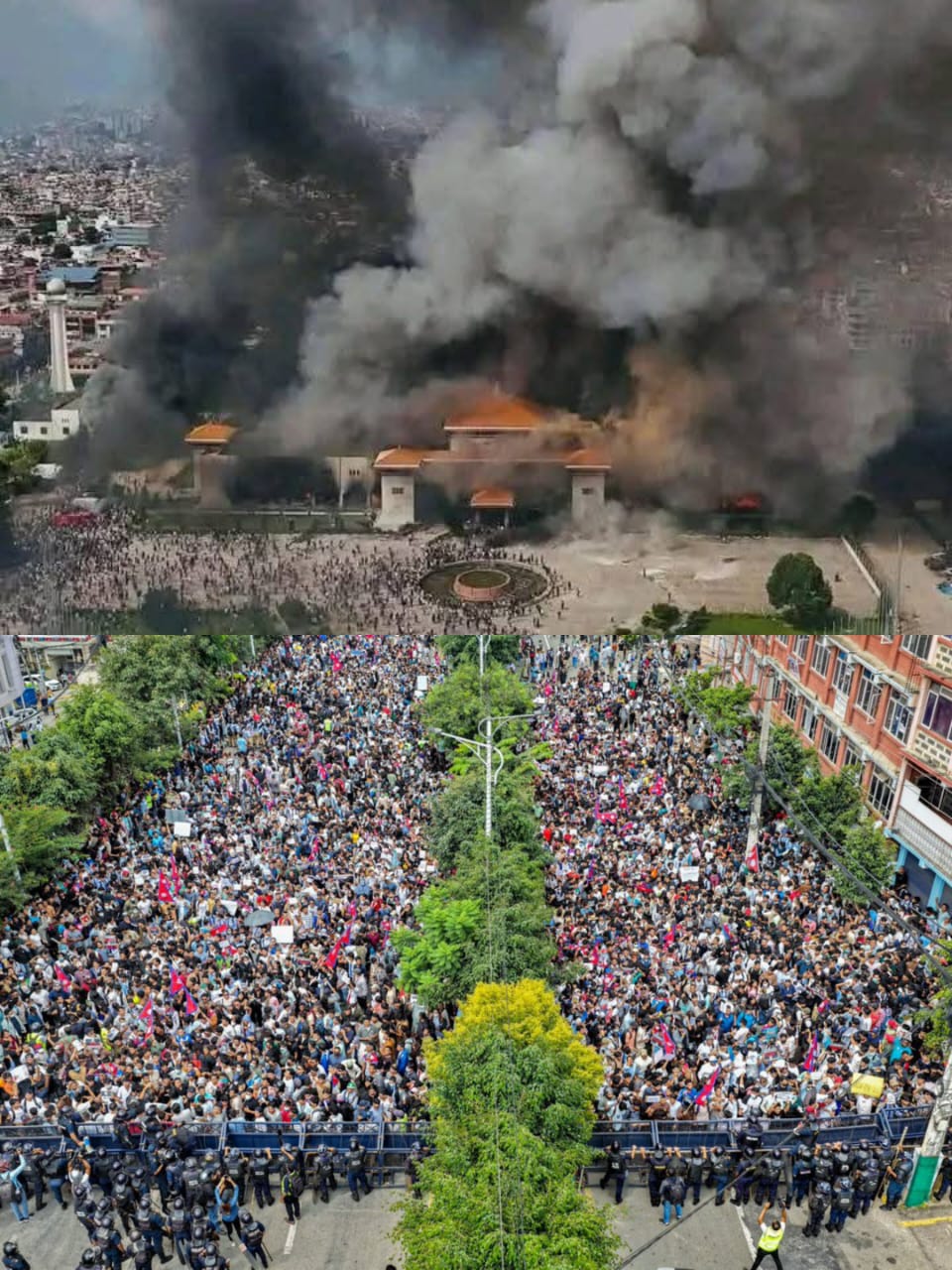
The peaceful protests which later turned violent, eventually led to the ouster and dissolution of Poudel government, as the young protesters who were mobilized through the social media held the government by its jugular for almost a week, demanding for heads of those in power.
The protesters had accused the Poudel Communist government of debuchery, corruption and nepotism, using social media platforms to expose the extravagant lifestyles of politicians’ children at the expense of the impoverished citizens of that nation.
Recall that Poudel, who has been in power as President since 13th March, 2023, had ordered the Ministry of Communications and Information Technology on September 4, 2025, to ban 26 major social media platforms due to alleged non-compliance and failure to register with the government within a seven-day deadline issued on August 28.
The affected platforms included Facebook, Instagram, WhatsApp, X (formerly Twitter) and YouTube, all of which the youths had used to voice their opinions about the government.
This decision pushed thousands of young people, including school students onto the streets in defiance of curfew orders and restrictions on public gatherings.
Their campaigns gained momentum as thousands of young people participated in demonstrations across Kathmandu, the capital city and other parts of the country, where they demanded good governance and accountability.
The protests quickly escalated into a broader anti-government movement, with demonstrators demanding the resignation of Prime Minister KP Sharma Oli and strict action against corrupt leaders.
The demonstrations later turned violent when police used force to disperse protesters, resulting in at least 19 deaths and over 300 injuries through the use of live rounds, baton charges and tear gas.
In retaliation, the youths hunted down politicians and eventually captured Nepal’s Finance Minister, Bishnu Prasad Paudel, who was stripped naked and chased into a river in Kathmandu.
Although the government later reversed the social media ban but the protests persisted, ultimately leading to Prime Minister KP Sharma Oli’s resignation.
The movement also forced several ministers from the Nepali Congress Party including Agriculture Minister Ramnath Adhikari, Health and Population Minister Pradip Poudel and Home Minister Ramesh Lekhak to resign, taking moral responsibility for the deaths of the Citizens.
Other senior party leaders, such as Bimalendra Nidhi and Arjun Narsingh Kesi, also stepped down, with plans underway to form a national government to initiate dialogue with the agitating Gen Z group.
The crisis deepened when protesters stormed parliament, set fire to government buildings and vandalised the residences of several top politicians, including Prime Minister Oli’s home in Balkot, Bhaktapur; an attack that primarily triggered his resignation.
While the vandalisation of government property and private homes is condemnable and deserve severe punishment, the courage and audacity of Nepali youths should serve as a lesson to other countries, especially Nigeria, on how Gen Z can force real change.