

By Our Admin
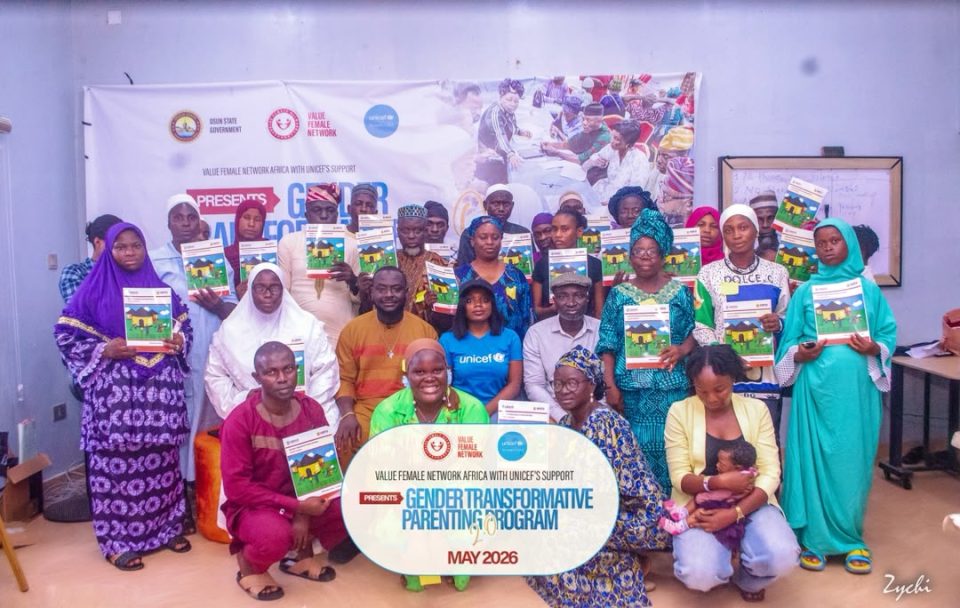
Ekiti State is set to join five other states benefiting from the Positive Parenting Programme in Nigeria as the United Nations Children’s Fund (UNICEF), Value Female Network Africa and the Ekiti State Ministry of Women Affairs and Social Development launch the Gender Transformative Positive Parenting Programme (GTPP) 1.0.
The programme, scheduled to commence on Wednesday, August 26, 2026, is designed to strengthen parenting and child protection while equipping parents and caregivers with practical skills to create safer and more supportive environments for children.
Implementation will begin with a two-day intensive training for community facilitators on August 26 and 27. The trained facilitators will subsequently lead a 10-week community parenting school across selected communities, directly reaching approximately 800 parents and caregivers.
Through household engagement, peer learning and community knowledge sharing, the programme is expected to extend key parenting and child protection messages to more than 16,000 parents and caregivers.
Participants will be trained in positive parenting, child development, emotional connection, parent-child communication, positive discipline, gender-equitable caregiving, positive fatherhood, adolescent supervision and digital safety.
The programme will also address safeguarding, prevention of sexual violence, female genital mutilation and child marriage, birth registration, community-based child protection structures and referral pathways.
According to the organisers, the various themes are interconnected, as the risks affecting children often overlap. Positive parenting, therefore, provides a platform for parents and caregivers to understand these risks within a coherent framework, prevent harm early, recognise warning signs, challenge harmful practices and know where to seek appropriate support.
Speaking ahead of the programme, UNICEF representative, Mr Denis Onose, said parents and caregivers remained central to an effective child protection system because they were often the first to identify a child’s needs and the first to take action.
He said the programme would combine practical parenting skills with information on prevention, referral pathways and community protection structures to enable families to respond to challenges earlier and with greater confidence.
“UNICEF is pleased to support the State Government, together with Value Female Network Africa, to strengthen the protective environment around children,” he said.
Also speaking, the Executive Director of Value Female Network Africa, Dr Costly Aderibigbe Saba, described the initiative as a landmark opportunity for parents and caregivers.
Saba said children should not only be viewed as leaders of tomorrow, but also as learners, innovators and contributors to society today, stressing the need to pay close attention to the environments in which they are raised, the values they learn and the protection they receive.
She said the programme would provide parents with practical tools to raise children with care, confidence and dignity, while giving families the information required to prevent violence and other harmful practices.
According to her, positive parenting would also make child protection more connected and practical for families by bringing issues such as positive discipline, female genital mutilation, child marriage and referral pathways under one framework.
She said: “A parent should not have to understand positive discipline in one programme, female genital mutilation in another, child marriage somewhere else and referral pathways only when a crisis occurs.
“Bringing these issues together helps parents understand the whole child and strengthens their role as the first protective environment around every child.”
The Ekiti State Ministry of Women Affairs and Social Development is expected to support state-level coordination, community mobilisation and linkages with relevant child protection and gender-based violence response structures.
The programme will also strengthen awareness and utilisation of referral pathways to ensure that children and families requiring additional support can access appropriate services in a timely and safe manner.
During the 10-week parenting school, parents and caregivers will participate in practical sessions aimed at helping them reflect on everyday parenting challenges, strengthen positive caregiving practices and build confidence in responding to child protection concerns within their homes and communities.
The Gender Transformative Positive Parenting Programme 1.0 represents a joint investment in stronger families and a safer future for children, with the organisers seeking to build safer homes, stronger families and an environment where children are protected, respected and supported to realise their full potential.