

Rotimi Idris
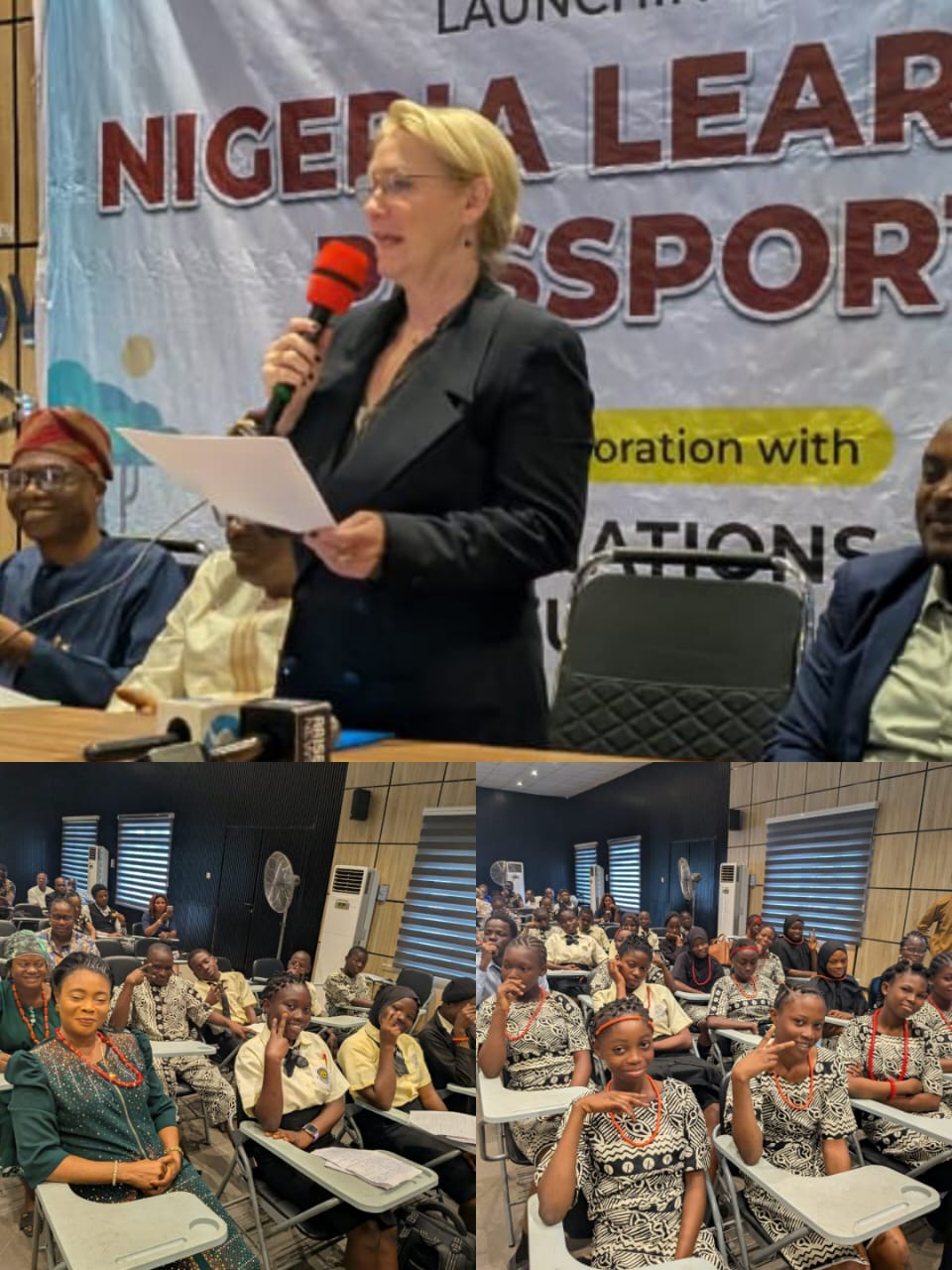
Oyo State Government in partnership with the United Nations Children’s Fund (UNICEF) has launched the Nigeria Learning Passport (NLP) in the State, with a call for wider access to digital learning opportunities, particularly for children and teachers in rural and underserved communities.
The launch, held at the Local Government Hall, Secretariat, Ibadan, formally marked Oyo State’s adoption of the digital education platform, making it the 26th state in Nigeria to do so.
Speaking at the ceremony, UNICEF Lagos Chief of Field Office, Celine Lafoucriere, commended the Oyo State Government for its commitment to improving education, particularly the recent recruitment of 5,000 teachers.
Lafoucriere said the recruitment of the teachers had strengthened the capacity of the state’s education system to reach more children and maximise the benefits of the digital learning platform.
She said the launch represented an important step towards fulfilling the state government’s commitment to ensuring quality education for every child in Oyo State.
According to her, about 2.4 million children and teachers across Nigeria are already using the Nigeria Learning Passport.
She explained that the platform offers thousands of curriculum-aligned lessons in subjects including Mathematics, English and Science, which can be accessed through mobile phones and tablets both online and offline.
Lafoucriere urged the state government and its partners to ensure that children in such communities, especially girls, were deliberately included among the early beneficiaries of the digital learning initiative.
She also called for continuous teacher training, stressing that capacity building should remain an ongoing process as new teachers enter the education system.
Her words, “Your Excellency, I am honoured to be in your state where today, at a time when your government has recruited five thousand new teachers who are now positioned in classrooms and ready to support more children through the exciting digital learning platform we are launching today.
“My team has worked closely with the Ministry of Education on this initiative and can confidently say that today’s launch is not a new promise. Rather, it is an important step forward in fulfilling your government’s commitment to providing quality education for every child in Oyo State.
“For this commitment and leadership, I extend UNICEF’s sincere appreciation. Today, approximately 2.4 million children and teachers across Nigeria are already using the Nigeria Learning Passport. With this launch, Oyo state becomes the 26th state to adopt the platform.
“The Nigeria Learning Passport provides thousands of curriculum-aligned lessons in mathematics, English, and science. These resources can be accessed through phones and tablets, both online and offline. Importantly, Airtel covers the cost of data usage, ensuring that families can access the platform free of charge.
“The Nigeria Learning Passport was developed in response to the learning disruption caused by COVID-19, when schools closed for more than 1.6 billion children worldwide almost overnight.
“The platform helped ensure that children could continue learning regardless of circumstance, whether through a mobile phone, radio, or even in environments with limited or no internet connectivity.
“Today, it remains a powerful tool for strengthening learning opportunities and building resilience within education systems.
“The Nigeria Learning Passport is the result of a strong collaboration between UNICEF, the Federal Government of Nigeria, and several committed partners.
Together: Microsoft developed the technology platform.
The Global Partnership for Education (GPE) provided financial support.
“UNICEF’s role is to ensure that the content aligns with the Nigerian curriculum, is available in languages children understand, and is supported by teacher training that enables effective classroom use.
“Teacher training must remain continuous. As new teachers join the education system, they should receive the knowledge and support needed to integrate the platform effectively into classroom teaching and learning”.
Speaking at the ceremony, Commissioner for Education, Segun Olayiwola said the launch represented a landmark in the state government’s continuing efforts to reposition education and ensure that the system responds effectively to the realities and demands of the 21st century.
Olayiwola said the rapid transformation brought about by technology had made it necessary for education systems to adapt to changing ways of working, communicating, acquiring knowledge and solving problems.
He said the state government, being committed to human capital development, had a responsibility to ensure that children and teachers were adequately prepared to participate meaningfully in a digital society and economy.
According to Olayiwola, the platform would help take learning beyond the traditional boundaries of the classroom by allowing learners to access educational content and learning resources through digital devices.
“The world is changing rapidly. Technology is transforming the way we work, communicate, acquire knowledge and solve problems. Education cannot remain outside this transformation.
“It is against this background that the Oyo State Government is embracing the Nigeria Learning Passport as an important instrument for strengthening digital learning and expanding access to quality educational resources”.
Also, the Permanent Secretary, Oyo State Ministry of Education, Science and Technology, Bamidele Oyinloye, described the launch as a historic occasion and another milestone in the state’s efforts to transform education through technology and innovation.
Oyinloye said the Nigeria Learning Passport represented more than the introduction of another digital platform, describing it as a deliberate effort to expand access to quality, inclusive, flexible and technology-enabled learning for learners, teachers and other stakeholders.