


Adebayo Adenrele
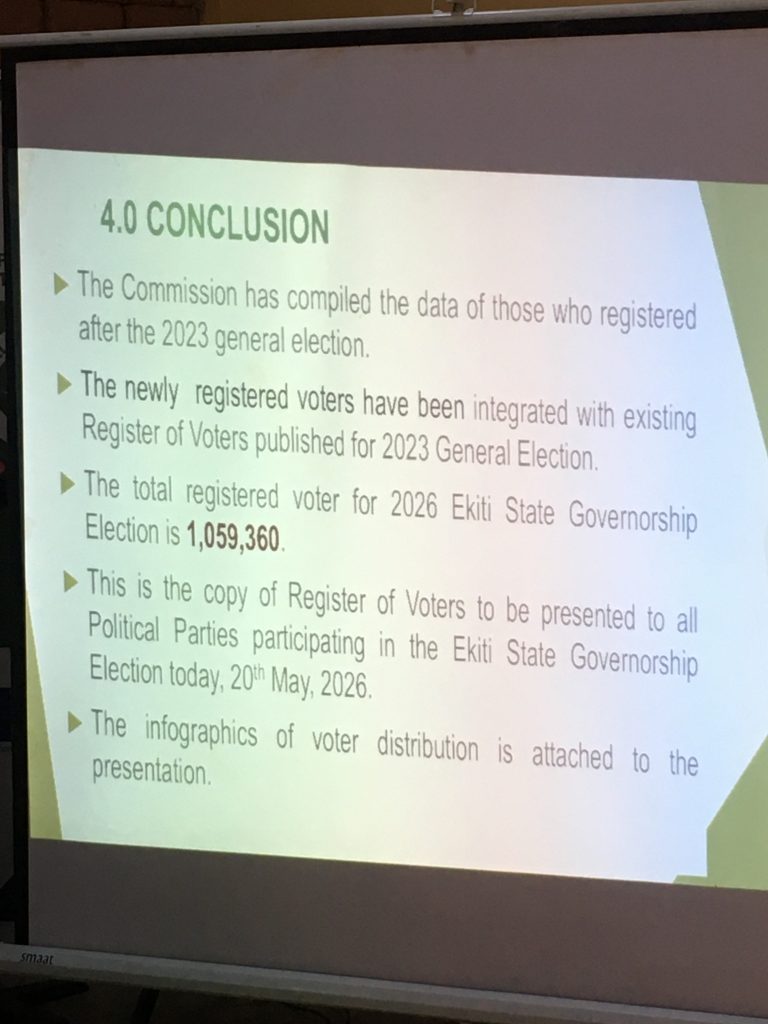
In less than one month to 2026 gubernatorial election in Ekiti State, middle-age voters between 36 and 49 years have constituted the largest bloc in the states voters’ register, accounting for 396,062 individuals (37.39%) out of the 1,059,360 total registered voters for the state’s election.
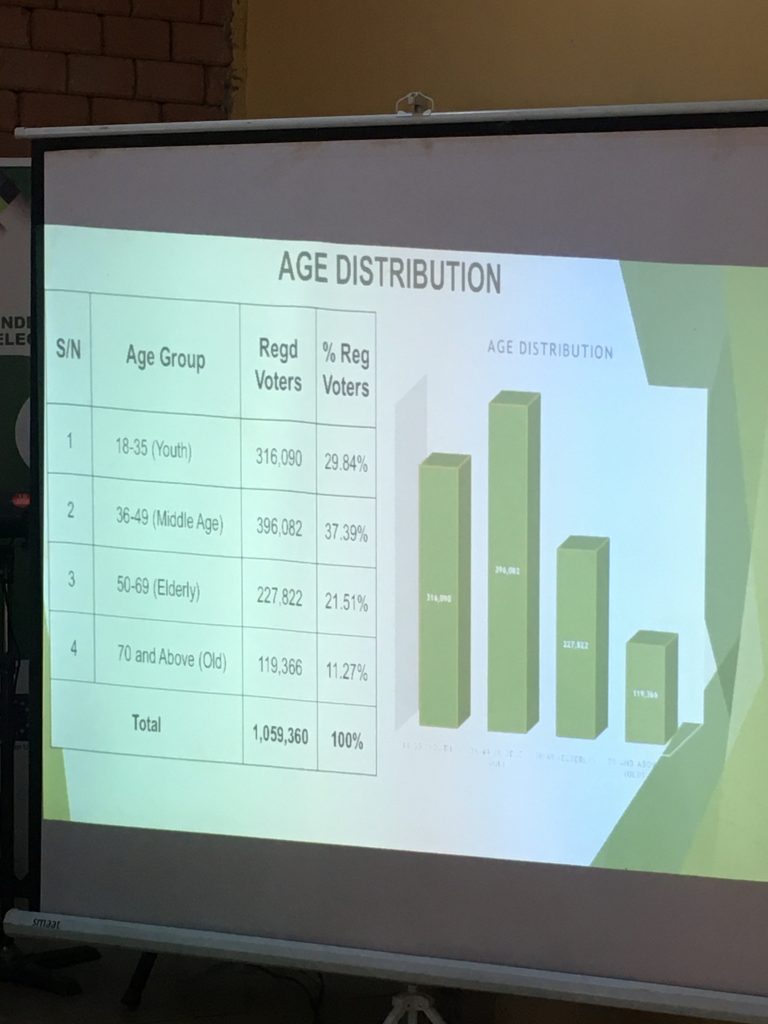
According to the latest age distribution data released by the Independent National Electoral Commission(INEC), during the official visit of its National Chairman, Professor Joash Amupitan to Ekiti headquarters, the middle-aged demographic has overtaken younger voters as the dominant force, positioning them to play a decisive role in determining the next governor of the state.
However, participation among youths aged 18-35 years has declined, with the group now representing 316,090 ( 29.86%) of the total electorate, despite constituting 65% to 70% of the total population of Ekiti State estimated at approximately 3.7 million to 4.1 million.
Other age groups include the elderly between 50 and 69 years which constitute 227, 822 (21.51%) while the old from 70 years and above constitute 119, 366 (11.27%).
Meanwhile, the National Chairman of the Commission, Professor Joash Ojo Amupitan, has warned political parties participating in the 2026 Ekiti State governorship election to refrain from vote buying and other forms of electoral inducement.
Amupitan gave the warning on Wednesday in Ado-Ekiti during the official publication of the voters’ register and presentation to political parties for the June 20, 2026 governorship election in Ekiti State.
The INEC chairman said vote trading remained one of the biggest challenges confronting elections in Nigeria, urging parties and their supporters to avoid actions capable of undermining the credibility of the electoral process.
He stressed that political parties must demonstrate commitment to democratic values by conducting issue-based campaigns and avoiding monetary inducement of voters.
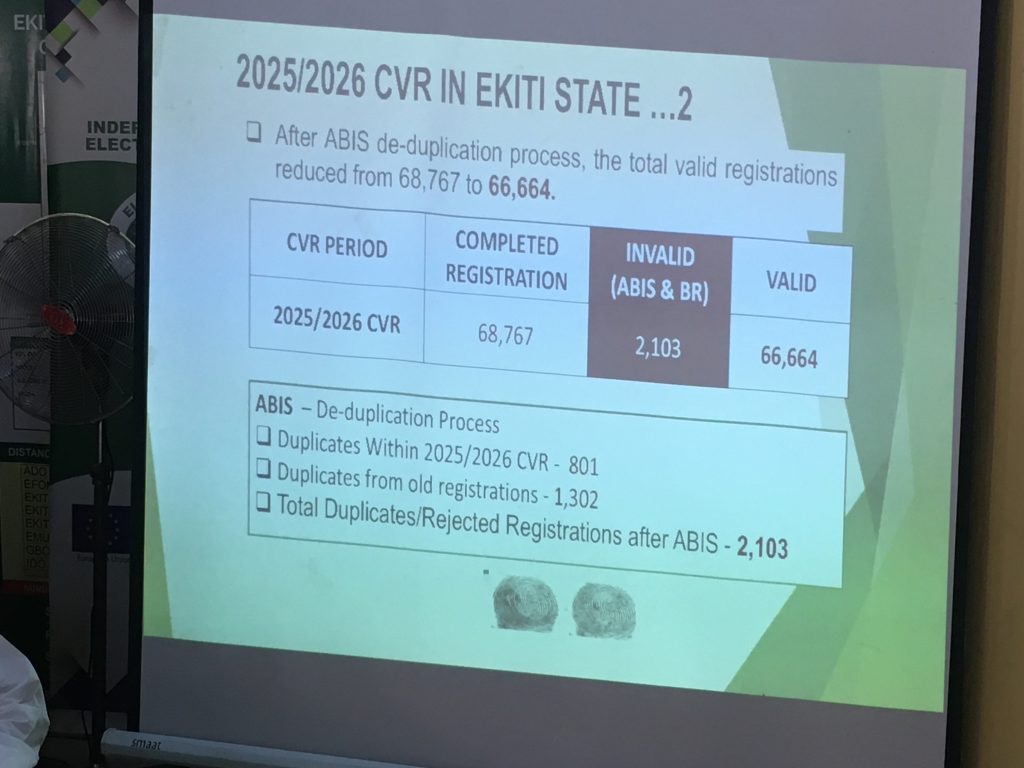
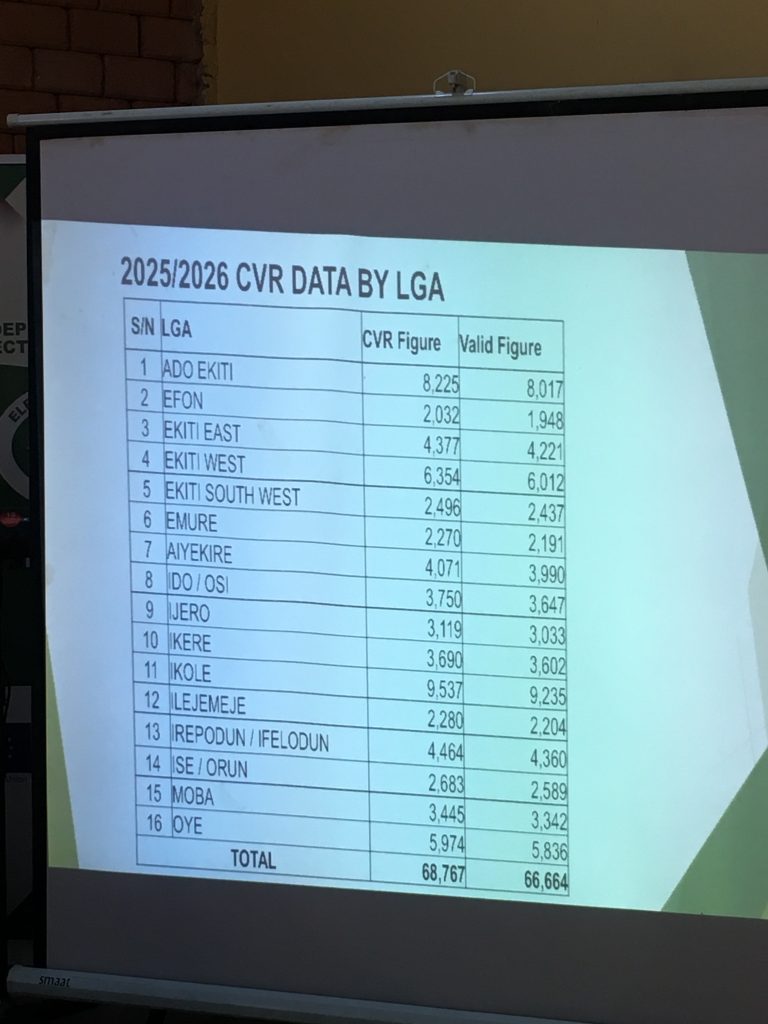
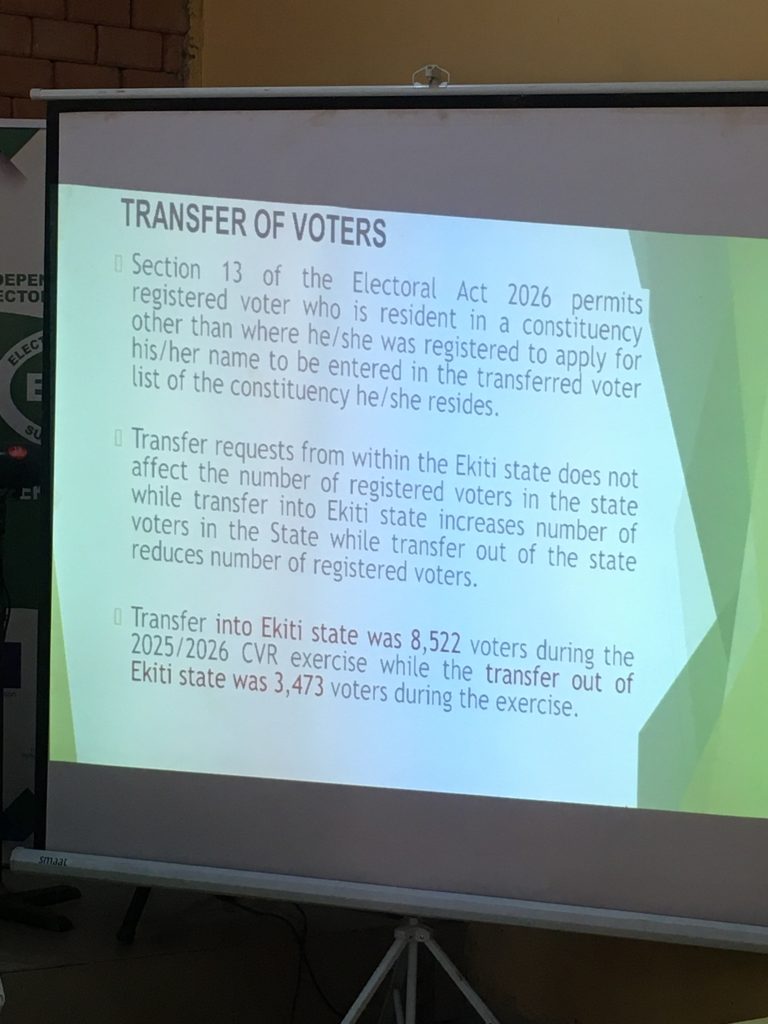
The INEC Boss noted that the publication of the voters’ register marked a critical constitutional and statutory step toward the governorship poll, revealing that the voters’ register in Ekiti had increased from about 900,000 recorded during the 2023 elections to 1,059,360 voters in 2026, following the Continuous Voter Registration exercise.
His words, “One of the major challenges and constraints to our electoral process is the issue of vote buying or vote trading. This is a criminal offence under the Electoral Act, and it is the responsibility of law enforcement agencies, especially the EFCC, ICPC and the police, to ensure that those involved are arrested and promptly prosecuted.
“We urge all political parties to refrain from vote trading because it is a big minus to the electoral process in Nigeria.
“We shall be signing the peace accord tomorrow. The election must be run peacefully and campaigns must be based on issues and not on personality. Let us walk the talk.
“The voters’ register is the foundation upon which free, fair and credible elections are built. Its accuracy, completeness and integrity are paramount to ensuring that every eligible voter’s voice is heard”.
Earlier, the Ekiti State Resident Electoral Commissioner, Bunmi Omosehindemi said the state office of the commission had intensified preparations for the governorship election through stakeholder engagements, voter education campaigns, security coordination, training of personnel and deployment of election technology.
The REC noted that arrangements for logistics, BVAS deployment, transportation and distribution of sensitive materials had also been strengthened to ensure a peaceful, transparent and inclusive election across the state’s 16 local government areas.
He appealed to political parties, candidates and supporters to conduct themselves responsibly and comply strictly with the Electoral Act and guidelines issued by the commission.
Present at the presentation of voters’ register were representatives of All Progressive Congress (APC), Peoples Democratic Party (PDP), Accord Party, African Democratic Congress (ADC), among others.