

Adebayo Adenrele
Stakeholders in Ekiti State have expressed concerns over the commercialisation of water in the state calling on government to address the situation.
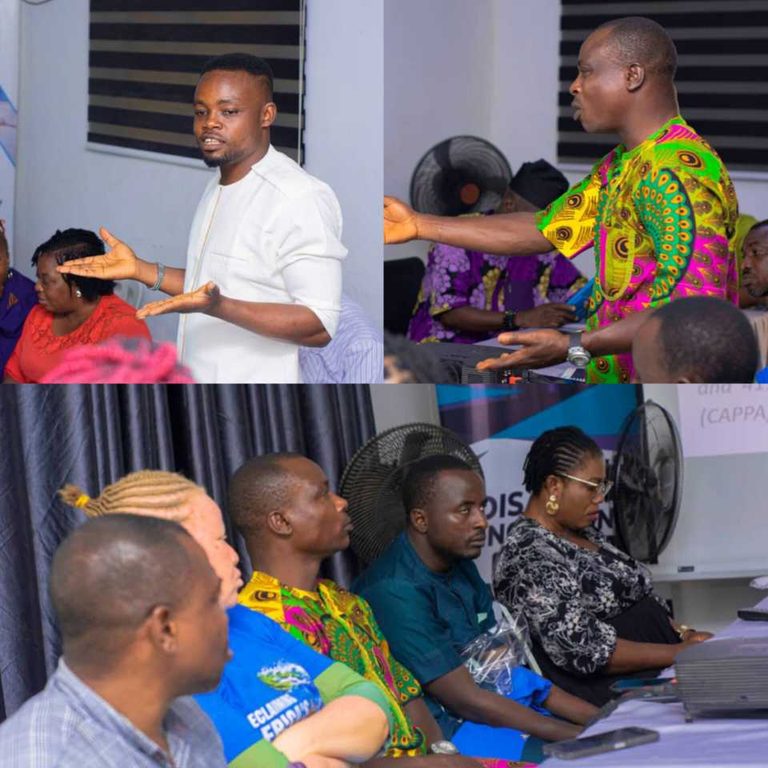
The people spoke during a one-day dialogue meeting on advocacy action for sustainable water governance in Ekiti, at the DINABI Conference Room, with support from Corporate Accountability and Public Participation Africa (CAPPA).
The meeting, organised to commemorate the International Week of Action under the theme, “Reclaiming Africa’s Water Future Through Strengthened Public Water Systems,” brought together community members, youth leaders, members of the Water Consumers Association, social media influencers, journalists and civil society organisations.
Participants raised concerns over uneven water distribution across communities, poor maintenance of public water facilities, high water charges despite irregular supply and the potential impact of water privatisation on vulnerable households.
They warned that treating water primarily as a commodity could undermine affordability and equitable access, particularly for low-income households and persons with disabilities.
The participants identified Bamigboye, Ajilosun and Okebola as areas where water was sometimes available but wasted, while residents of Ikingbinsi and Olorunsogo reportedly faced inadequate access. Ikere-Ekiti was also identified as an area where water supply remained a serious concern.
They further expressed concern that water charges could reportedly reach N5,000 even when supply was inadequate or unavailable, while weak monitoring of funds allocated for maintaining community water facilities could worsen the situation.
The meeting also noted that some communities had limited understanding of access to water as a public service, with residents often relying on private wells and boreholes without fully appreciating the government’s responsibility to provide safe and affordable water.
Participants said the challenges were particularly severe for persons with disabilities where water points and collection facilities were physically inaccessible or assistance was unavailable.
They called for improved planning and equitable distribution of water infrastructure, alongside effective monitoring of public water facilities and greater involvement of community members in water governance.
To address the challenges, the participants urged journalists and social media influencers to use their platforms to educate the public on water as a human right and the implications of privatisation.Study Biology
They also called on community groups, civil society organisations and the Water Consumers Association to intensify advocacy and engage government authorities on gaps in water supply, infrastructure maintenance and accountability.
The participants recommended coordinated campaigns to bring community concerns to policymakers and urged the Water Consumers Association to pursue registration or formal affiliation with the Network of Civil Society Organisations in Water and Sanitation (NEWSAN), where appropriate, to strengthen collaboration in the sector.
Earlier, in his remark, the Executive Director of DINABI, Mr Olajide Funso called for stronger public water systems and improved government accountability to ensure equitable access to safe and affordable water in Ekiti State.