

By David Williams
SS3 student and girl-child rights advocate, Miss Ojo-Olusegun Oreoluwa Mary, has called for greater involvement of girls in decisions affecting their lives, warning that excluding them from choices about their education, relationships and future could undermine their rights and aspirations.
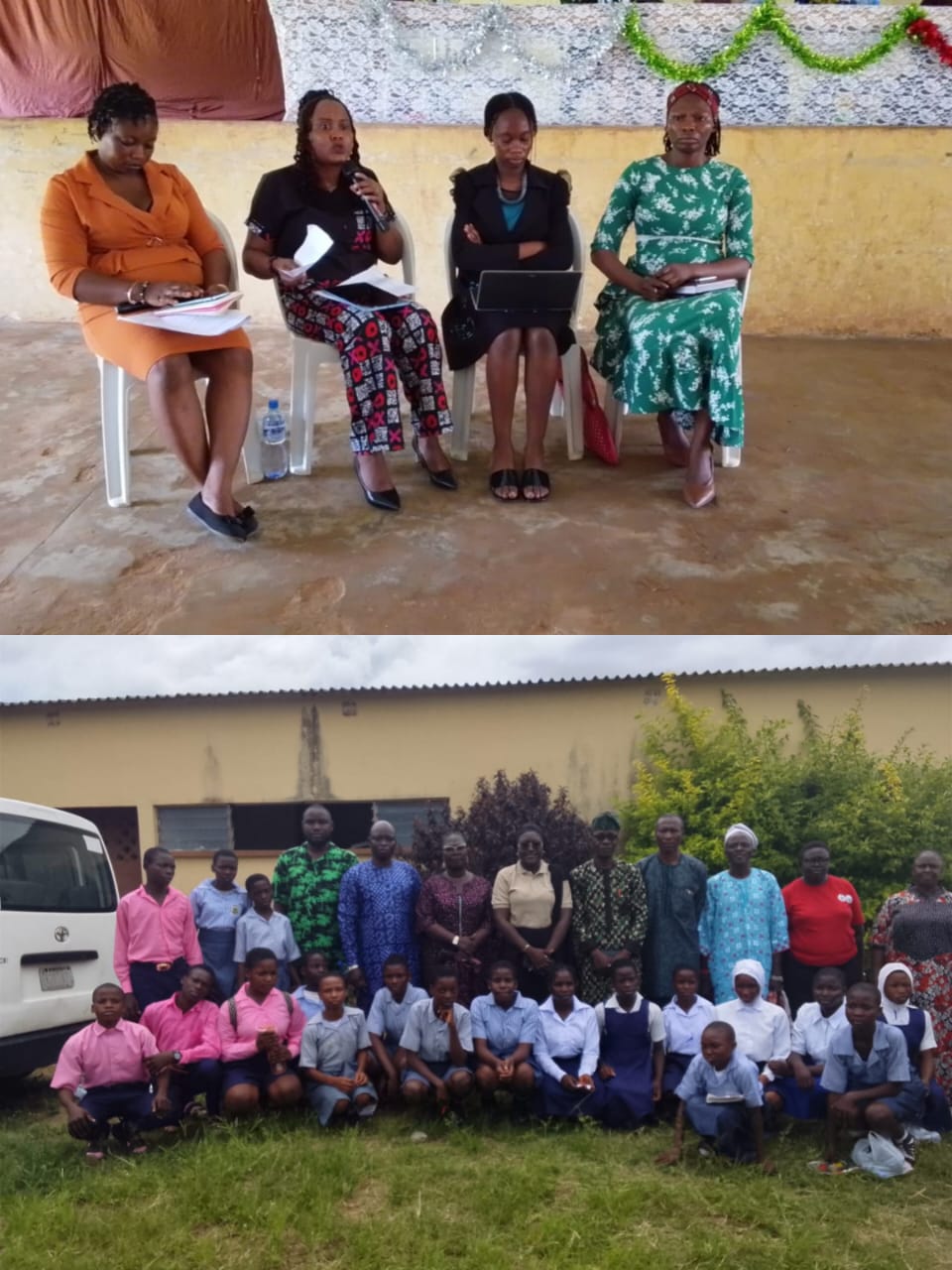
Ojo-Olusegun, who is the Executive Director of the Centre for Gender Space Initiative (CentreGSI), made the call during the 2026 International Day of the Girl Child celebration at Government College, Oye-Ekiti, Ekiti State.
The event brought together stakeholders who advocated increased investment in girls’ education, life skills, safe spaces and stronger legal protection as part of efforts to tackle child marriage and other harmful practices limiting the development of girls in Nigeria.
The young advocate stressed that parents and adults must listen to girls, respect their opinions and allow them to participate in decisions that directly affect their lives.
She said empowering girls to express themselves, pursue their ambitions and take part in initiatives promoting their rights would prepare them for leadership and enable them to make informed choices about their future.
Using a drama presentation at the event to illustrate her argument, Ojo-Olusegun described a scenario in which a father attempted to force his daughter into marriage without considering her wishes.
She said the girl’s decision to seek assistance from someone who could intervene and facilitate communication with her father demonstrated the importance of giving girls access to trusted adults and support systems.
The advocate urged parents to abandon attitudes that confine girls to domestic responsibilities while prioritising boys’ education, insisting that both sexes deserved equal opportunities to learn, develop their talents and become future leaders.
She also called on stakeholders to encourage girls to lead initiatives and speak up for the rights of their peers, adding that investing in their education and development would benefit their families and society.
Also speaking at the programme, a student of St. Augustine Comprehensive High School, Oye-Ekiti, Miss Ajayi Adeshewa, identified poverty, cultural beliefs, gender inequality and insecurity as factors contributing to child marriage in Nigeria.
She said the practice deprived girls of education, exposed them to health risks and restricted their opportunities to realise their potential.
Adeshewa described education as a critical instrument for preventing child marriage, noting that girls also needed life skills such as communication, decision-making, leadership and financial literacy to protect themselves and make informed choices.
She urged government, parents, schools and development partners to invest more in girls’ empowerment, stressing that every girl deserved a childhood, access to education and the opportunity to pursue her dreams.
In her opening remarks, the Project Coordinator of the Ekiti State Adolescent Girls Initiative for Learning and Empowerment (AGILE) Project, Yewande Adesua, outlined interventions aimed at improving access to education, strengthening digital learning and equipping adolescent girls with life skills.
The global theme for the 2026 commemoration is “End Child Marriage and Invest in Girls’ Rights,” while the AGILE contextual theme is “Empowering Adolescent Girls through Education, Life Skills, and Safe Spaces to End Child Marriage in Nigeria.”
Adesua disclosed that the project had extended interventions to 203 public secondary schools across Ekiti State’s 16 local government areas.
According to her, the interventions include school infrastructure improvements, digital learning facilities, financial assistance and targeted programmes designed to help adolescent girls remain in school and acquire skills for independent living.
She said more than 1,468 classrooms had been renovated, alongside improvements to school sanitation facilities to provide a more conducive learning environment.
The project, she added, had supplied 4,202 laptops and desktop computers, as well as smartboards, across the 203 beneficiary schools.
Solar power systems and internet connectivity had also been installed in 130 schools to improve access to digital learning resources and equip students with technological skills.
Adesua said the investments were intended to bridge learning gaps and prepare students, particularly girls, for opportunities in an increasingly technology-driven world.
The AGILE coordinator further disclosed that 2,808 students benefited from the first cohort of the project’s Conditional Cash Transfer intervention.
She explained that the financial assistance was structured according to students’ school levels to reduce economic barriers to education, encourage school retention and support transitions between educational levels.
Adesua stressed that investment in girls must go beyond enrolment figures, requiring sustained efforts to address the economic and social challenges that could prevent them from completing their education.
She also highlighted the project’s Second Chance Education initiative at the Girls’ Finishing School, which provides alternative learning and vocational opportunities for girls whose education has been interrupted.
According to her, 37 girls recently graduated from the programme, with 13 trained in hairdressing and 24 in fashion design.
She said the initiative was designed to give beneficiaries opportunities to develop marketable skills and work towards greater economic independence.
The discussions also focused on the importance of safe spaces in helping adolescent girls build confidence, develop life skills, understand their rights and seek help when confronted with abuse, discrimination or other challenges.
Gbenuola Ayedun, the Safe Space and Life Skills Desk Officer for Component 2.2a of the AGILE Project, was among the speakers who addressed issues relating to girls’ empowerment and protection.
Speaking on the legal framework for safeguarding children, Barrister Ruth Oluwaleke of the New Initiative for Social Development said children were entitled to protection under national and international legal instruments, including the United Nations Convention on the Rights of the Child and Nigeria’s Child Rights Act.
She emphasised that decisions concerning children should be guided by their best interests, warning that child marriage could deprive girls of essential aspects of childhood and undermine their development into adulthood.
Oluwaleke advised girls facing pressure to marry or other situations threatening their rights to approach trusted adults, including teachers, school counsellors and legal practitioners.
She urged them to seek assistance from relevant authorities whenever their concerns were not adequately addressed.
Similarly, Mrs Jumoke Omisore of FELA drew attention to the effects of menstrual health challenges on girls’ education, confidence and participation in school activities.
She called for improved access to sanitary pads, clean water and adequate toilet facilities in schools, noting that a supportive environment was essential to ensuring that menstruation did not become a barrier to girls’ education.
Omisore urged parents to educate their children about menstruation before they begin experiencing it, while encouraging teachers to create an atmosphere in which girls could seek assistance without fear of shame or discrimination.
The speakers called for sustained collaboration among government, families, schools, civil society organisations and development partners to protect girls’ rights, prevent child marriage and expand access to education and vocational opportunities.
They maintained that empowering girls through education, life skills, safe spaces and meaningful participation in decisions affecting them was essential to enabling them to become confident, independent and productive members of society.